The trailhead sign off Sourdough Road has looked a little different this season. New plantings line the approach, and Gallatin Valley Land Trust has been back twice this summer for organized work parties, once on July 29 and again on August 12, both dedicated specifically to Triple Tree. If you hike here often, you've probably walked past a volunteer crew with loppers and a wheelbarrow without quite registering what they were doing: maintaining the trail that, earlier this year, beat out every other route in the valley in GVLT's community bracket-style vote for Bozeman's favorite trail.
The win makes sense on the surface. Triple Tree has a view, a creek, and an easy drive from town. But plenty of trails in the Gallatin Valley have those same ingredients and didn't win. The more interesting answer is in how the trail is built, and in the surprisingly deliberate history behind why it exists at all.
The trail reads as one hike but moves like two
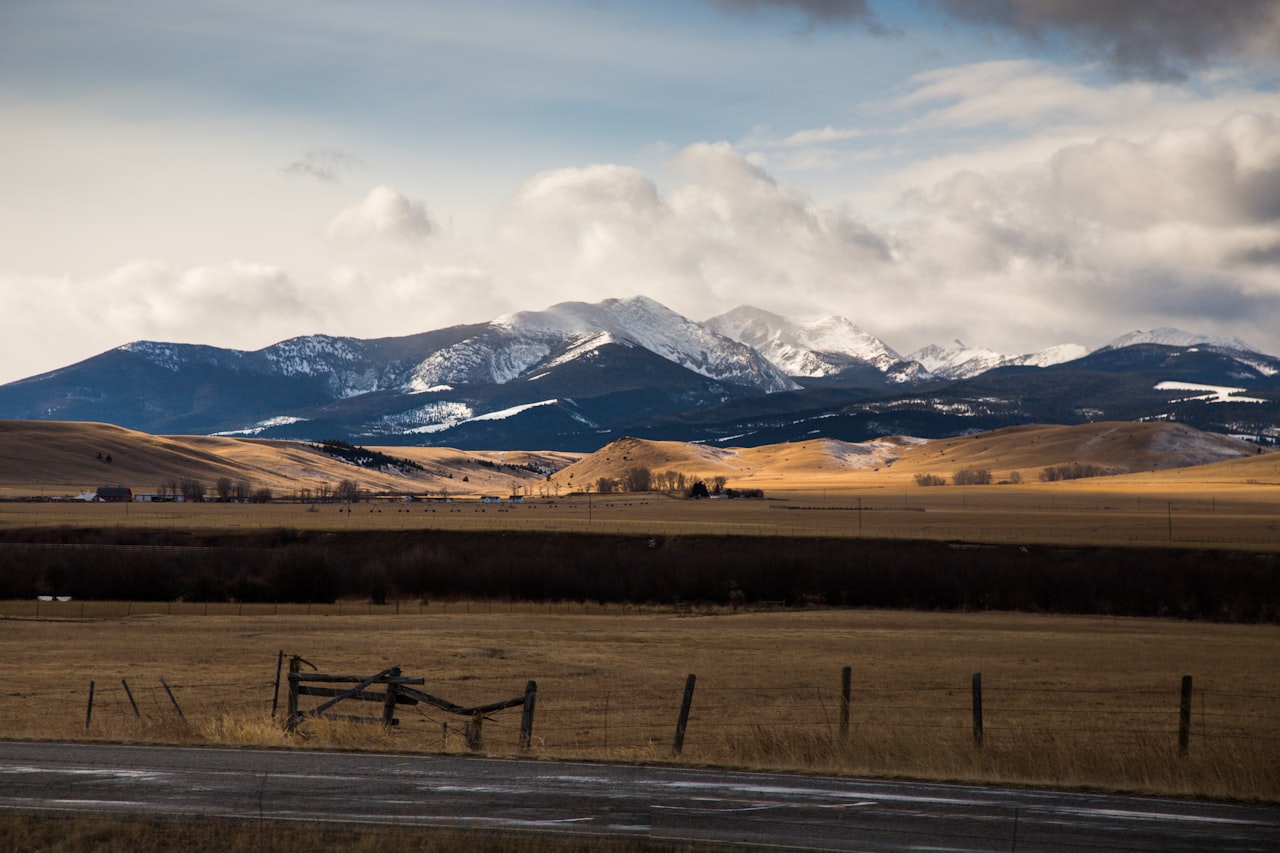
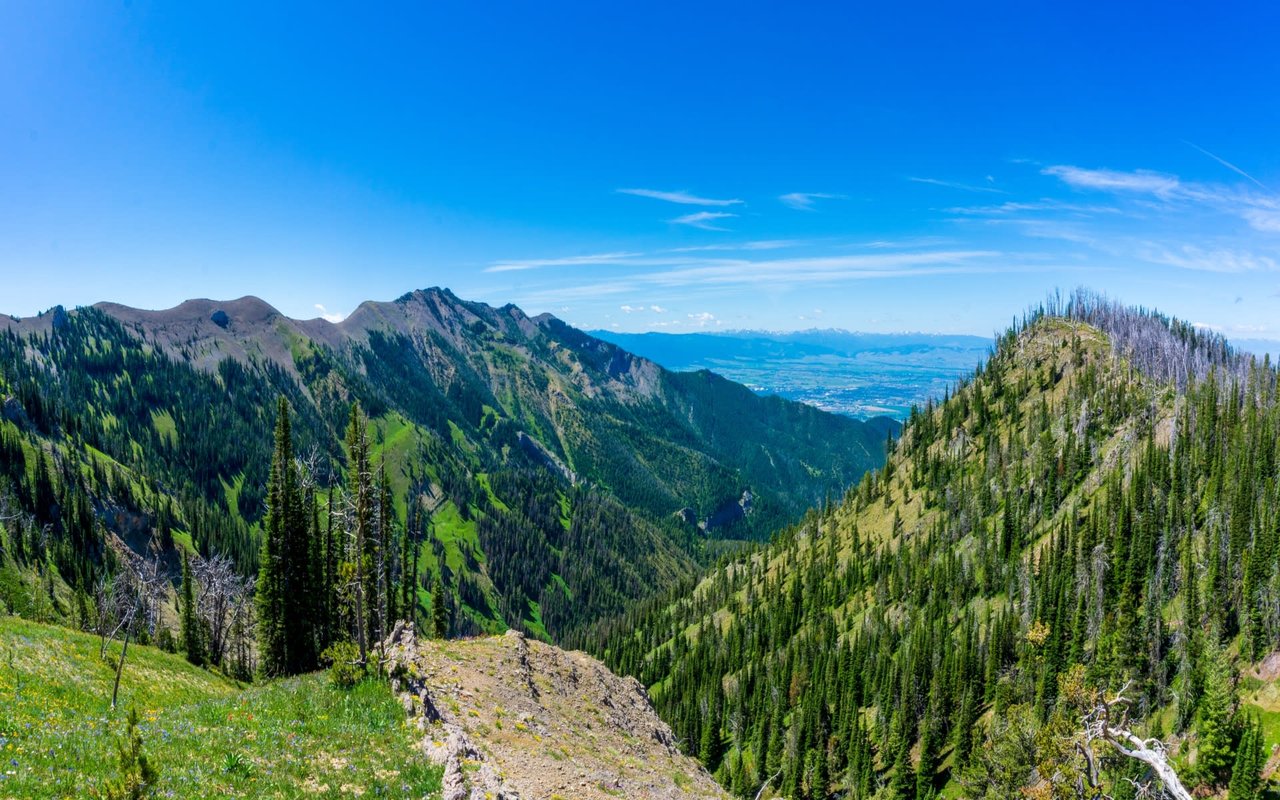
Ask someone who's done Triple Tree to describe the difficulty and you'll get two different answers depending on which stretch they remember. The first mile and a half is nearly flat: grassy fields, a couple of gentle hills, a crossing or two of Limestone Creek. Then the trail turns south toward the foothills of Mount Ellis and starts switchbacking up in earnest, gaining most of its roughly 800 feet of elevation in a short, concentrated push to the overlook.
That split shows up in how differently trail sites rate the same route. Outside Bozeman lists it as Easy, with an 800-foot gain over a 4.5-mile round trip. AllTrails calls it moderately challenging over a longer 5.5-mile measurement with 961 feet of gain. Neither is wrong. They're describing a trail that spends most of its distance being a warmup and a small fraction of it being the actual climb. Trail directions from onX confirm the shape of it: after crossing the fields, the route turns and heads "straight for the foothills of Mount Ellis," where it finally starts climbing, switchbacking up to the high point of the loop.
Gallatin Valley Land Trust's own guidance leans into this. Its trail notes recommend doing the loop counterclockwise, since starting to the right offers a gentler grade on the way up. It's a small routing choice, but it's the kind of detail that only shows up if someone has watched a lot of first-time hikers get surprised by the back half of a trail they assumed would stay easy the whole way.
A trail that almost didn't survive its own popularity
Triple Tree wasn't always the well-graded loop it is today. Before Gallatin Valley Land Trust took it on, the original route climbed straight up the steepest line to the overlook, a path hikers, bikers, and skiers loved but one that was genuinely dangerous to descend and expensive to maintain. It also had a bigger problem: the route crossed state land without the proper permissions to be there at all.
GVLT negotiated with the State of Montana, Gallatin County, and the Triple Tree Ranch Owners' Association to fix that. The result was a permanent easement, granted by the state to the county, with GVLT taking on day-to-day maintenance. With help from the Montana Conservation Corps and cooperation from the ranch association, the trail was rerouted for better sightlines and safety, extended by an additional 1.5 miles, and given expanded parking at the Sourdough Road trailhead, the same lot most hikers use today.
In other words, the trail that just won a popularity contest exists in its current, hikeable form because of a legal fix most of its visitors will never think about. The favorite-trail vote measured how the trail feels now. The easement negotiation is why it's still here to feel anything about.
What's actually happening at the trailhead this fall
The work isn't finished, and it isn't only historical. GVLT's events calendar for 2026 has repeatedly listed volunteer sessions to water new plantings near the Triple Tree trailhead, alongside the two dedicated work parties this summer. If you've noticed young vegetation near the parking area that wasn't there last year, that's why. Anyone who spots a maintenance issue on the trail itself, a washed-out section after heavy rain or a downed branch across the switchbacks, can call GVLT's line directly at 406-587-8404 rather than waiting for the next scheduled work party to catch it.
There's also a smaller, quieter change worth watching for at the summit. The overlook is marked by a small grove known locally as the "three trees," a natural gathering point where two benches let hikers sit with the view instead of just passing through. One of those three trees has recently shown signs of insect damage, a reminder that the landmark itself is a living thing and not a fixed backdrop.
The connector most drivers never use
Nearly everyone reaches Triple Tree by car, parking in the lot off Sourdough Road about three miles past where the road crosses Kagy Boulevard, just after the entrance to the Triple Tree subdivision. But about a mile into the hike, there's a junction most people walk straight past: the Painted Hills Connector Trail, which links Triple Tree to the Painted Hills Trail system closer to town. It's a longer approach and not a shortcut, but it means the loop is technically walkable from parts of Bozeman without a car at all, a detail that matters more to someone training for distance than someone squeezing in a lunch break.
Why fall is the version of this trail worth doing
Triple Tree is open year-round and doubles as a cross-country ski route in winter, but the trail's own seasonal notes point to a narrower sweet spot: late spring through mid-fall for hiking, with late summer bringing enough exposed, unshaded stretches to get genuinely hot, offset by the switchbacks near the top, which stay shaded most of the way. Fall solves both problems at once. The heat drops, the mud that plagues the creek crossings in spring has usually dried out, and the bug pressure that shows up in warmer months eases off. One hiker's trip log from a recent visit captured the appeal in a single line: "Dry, stunning (fall colors!), and not too much traffic on a mid-week day."
That last part matters. Triple Tree's popularity, the same popularity that just won it a community vote, means weekends can get crowded, with reviewers noting parking can fill early. A weekday fall visit avoids most of that.
It's also worth carrying bear spray regardless of the season. GVLT's own trail description is direct about it: the area sees deer, moose, and often bears, and hikers are advised to stay alert. Dogs are welcome but must stay leashed, both for the wildlife and because the trail's creek crossings offer a convenient water break for them along Limestone Creek.
Trail conditions and seasonal notes like these change year to year with weather and maintenance schedules, so anyone planning a specific outing should check GVLT's own trail page or call ahead if there's been recent rain or reported wildlife activity nearby.
For anyone whose daily walk or weekend ride already runs through the Triple Tree loop, the favorite-trail vote wasn't really a surprise. The switchbacks, the benches, the volunteers watering new plantings by the parking lot, all of it adds up to a trail that's been shaped, argued over, and rebuilt by people who wanted it to stay exactly this good. If you're curious about what else makes this corner of Bozeman worth paying attention to, Joy Vance & Co. keeps a close eye on the neighborhoods around it.