By Joy Vance
Montana's summers are extraordinary — long golden evenings, mountain air, and the kind of outdoor living that makes Bozeman one of the most desirable places in the country. But building an outdoor kitchen here isn't the same as building one in Florida. Montana's winters are real, and an outdoor entertainment space that doesn't account for freeze-thaw cycles, heavy snow loads, and below-zero temperatures will cost you significantly more in the long run than one designed thoughtfully from the start. Here's how to get it right.
Key Takeaways
- Material selection is everything — Montana's climate demands freeze-resistant, weather-tested options for every surface
- A permanent roof structure dramatically extends usability and protects your investment
- Winterization planning should be built into the design, not addressed as an afterthought
- The best Bozeman outdoor kitchens treat the space as a four-season room, not a summer amenity
Material Selection: The Foundation of a Montana-Ready Kitchen
In Bozeman's climate, where temperatures can swing from summer highs into deep freeze, materials that work beautifully in mild climates can crack, corrode, or fail entirely. Every surface in your outdoor kitchen needs to be evaluated for freeze-thaw resilience, not just aesthetics.
Materials that perform in Montana conditions:
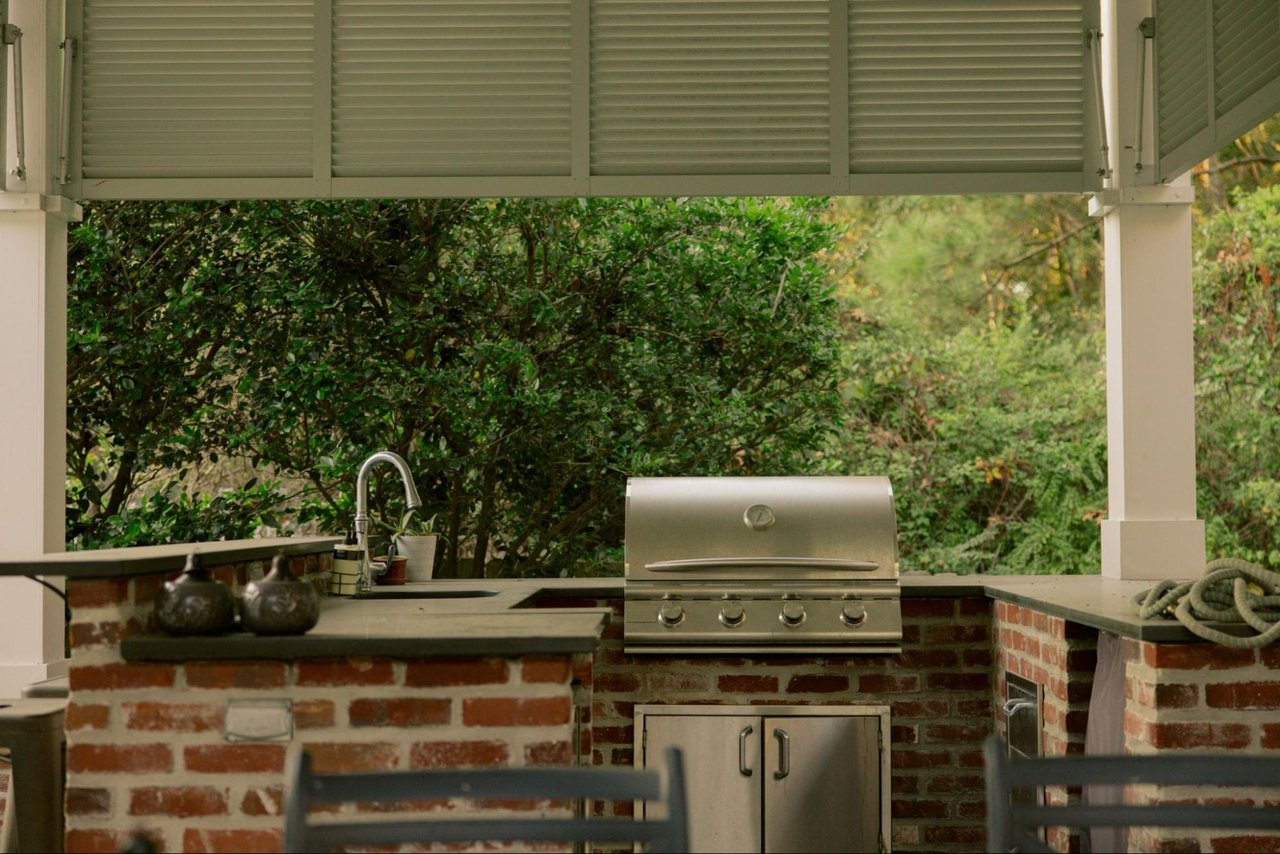
- Stainless steel appliances and cabinetry — the standard for outdoor kitchens in cold climates; rust-resistant, structurally sound through temperature extremes, and easy to clean after winter storage
- Granite or concrete countertops — non-porous and freeze-resistant; avoid ceramic tile countertops, which can crack under freeze-thaw pressure
- Natural stone or large-format porcelain decking — travertine and granite pavers stay durable through Montana winters; avoid smaller porous tiles that absorb water and heave under frost
- Powder-coated aluminum or stainless steel framing — for pergolas and structure elements; avoids the moisture absorption issues that untreated wood faces in snow and rain cycles
Roofing and Shelter: Extending Your Season
A Montana outdoor kitchen without substantial overhead shelter is a summer-only amenity. A well-designed roof structure — whether a full roof extension from the main house, a pergola with weatherproof covering, or an engineered freestanding structure — transforms your outdoor kitchen into a space you can use from spring through fall, and on mild winter days as well.
Shelter options worth considering:
- Full roof extension — integrating the outdoor kitchen under an extension of your home's roofline provides the most complete protection and the most seamless architectural result
- Insulated pergola with weatherproof panels — allows natural light while blocking precipitation; clear panel options maintain views of the Bridger Range
- Retractable awning systems — flexible for variable Montana weather, though less protective than a permanent structure under heavy snow loads
- Radiant heating elements — ceiling-mounted or under-counter radiant heaters extend outdoor comfort into cooler evenings and early fall significantly
Winterization: Design It In From the Start
This is where most Montana outdoor kitchens are under-planned. Water lines that haven't been properly isolated will freeze and burst. Appliances left exposed without protection deteriorate faster than necessary. A kitchen designed with winterization in mind handles the transition between seasons with far less effort and expense.
Winterization features to build into your design:
- Shutoff valves and drainable water lines — all plumbing should have a dedicated shutoff and drain point; install these during construction, not as a retrofit
- Appliance covers and storage provisions — built-in storage for covers or a designated equipment storage area keeps your investment protected through the off-season
- Sloped decking and drainage — grade your outdoor surface to direct water and snowmelt away from the kitchen structure and the home's foundation
- Frost-resistant cabinet hardware — metal hardware without proper coating can corrode from repeated freeze-thaw; specify correctly rated hardware during the build
Entertainment Space Planning for Montana Living
The best Bozeman outdoor kitchens are designed not just for cooking but for the way people actually gather here — large groups, long evenings, varied weather. Generous seating, fire features, and outdoor sound all contribute to a space that becomes the heart of summer entertaining.
Entertainment elements that elevate a Montana outdoor kitchen:
- Wood-burning or gas fire pit or fireplace — central gathering point for cooler evenings; Montana summers cool quickly after sunset
- Outdoor audio — weatherproof speakers integrated into the structure, not added as an afterthought
- Bar seating at the kitchen island — keeps guests connected to the cooking while maintaining clear prep space
- Dedicated dining area with weather-resistant furniture — deep, well-anchored furniture that doesn't need to be moved with every wind event
FAQs
How much does a quality outdoor kitchen cost in the Bozeman area?
For a well-designed, Montana-appropriate outdoor kitchen with proper materials, shelter, and winterization, budgets typically start around $30,000 to $50,000 and scale significantly with size, appliance quality, and roof structure complexity. Treat it as an investment in the home's lifestyle value and resale appeal.
Can I use a standard outdoor kitchen design from a national retailer in Montana?
We'd advise against it. Standard outdoor kitchen kits are designed for mild climates and typically use materials that underperform in Montana's freeze-thaw conditions. A locally designed and built kitchen will outlast and outperform a nationally sourced kit significantly.
Does an outdoor kitchen add resale value to a Bozeman luxury home?
Yes — particularly one that is well-designed, properly built for the climate, and integrated into a cohesive outdoor entertainment space. Bozeman's luxury buyers value outdoor living highly, and a thoughtfully executed kitchen and entertainment area is a genuine differentiator at listing.
Ready to Find Your Bozeman Home With the Perfect Outdoor Space?
Whether you're designing a new outdoor kitchen or searching for a property that already has one, I can help you navigate what's available in Bozeman's luxury market.